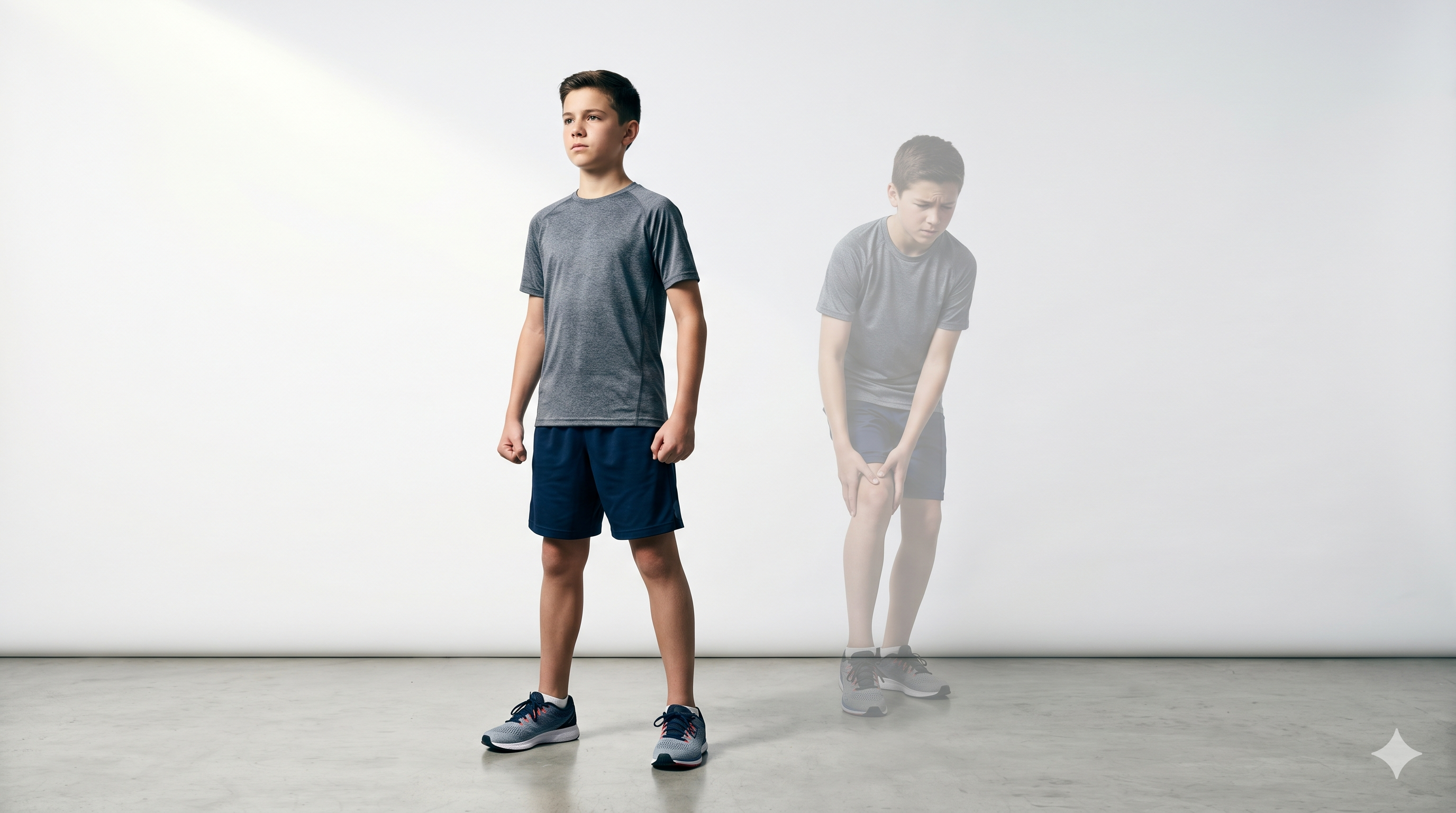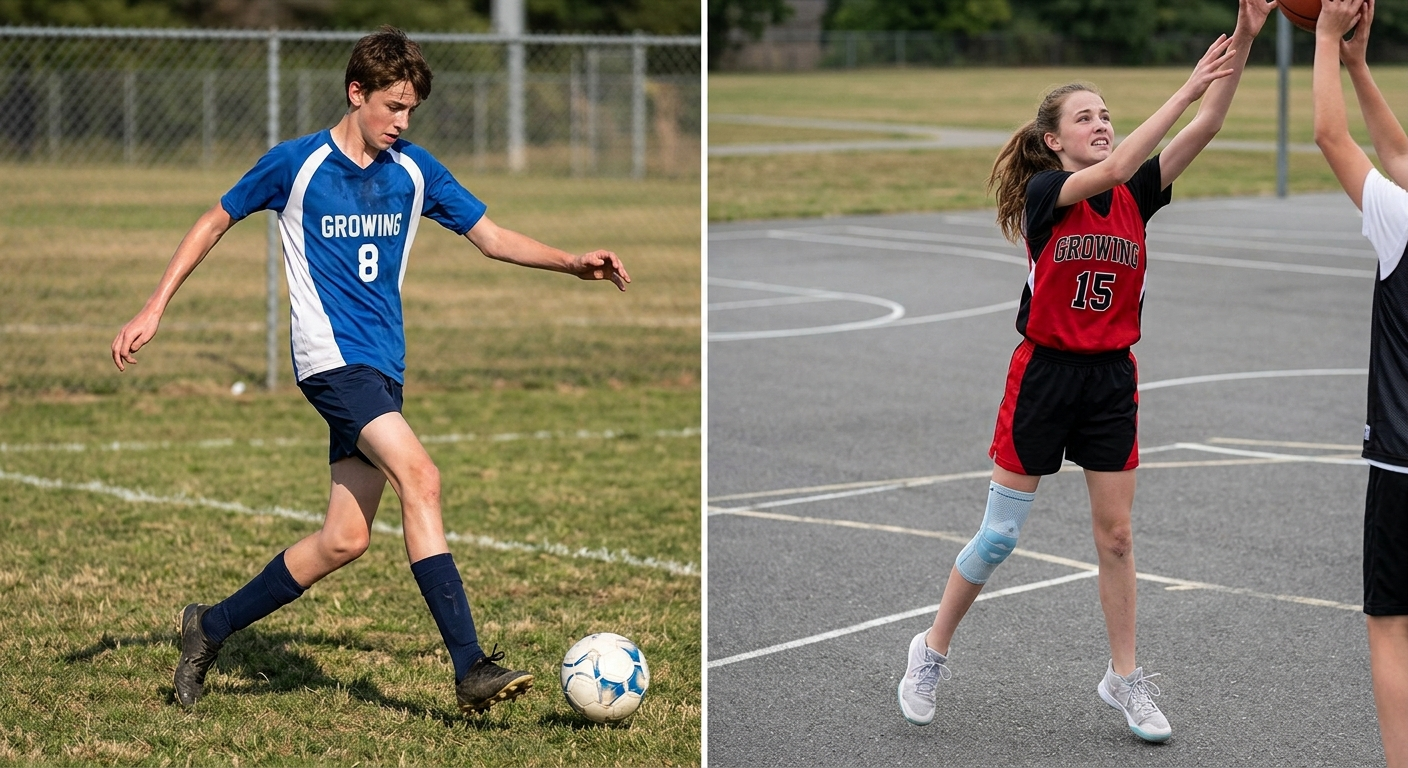

There are a lot of posts right now about reimagining school sport. The conversation is overdue. But most of them stop at the program level. More teams. Better coach development. Stronger facilities funding. That isn’t going to produce the downstream effects people are hoping for. It reinforces what’s already in play.
What if the real opportunity isn’t sport at all. What if it’s something bigger.
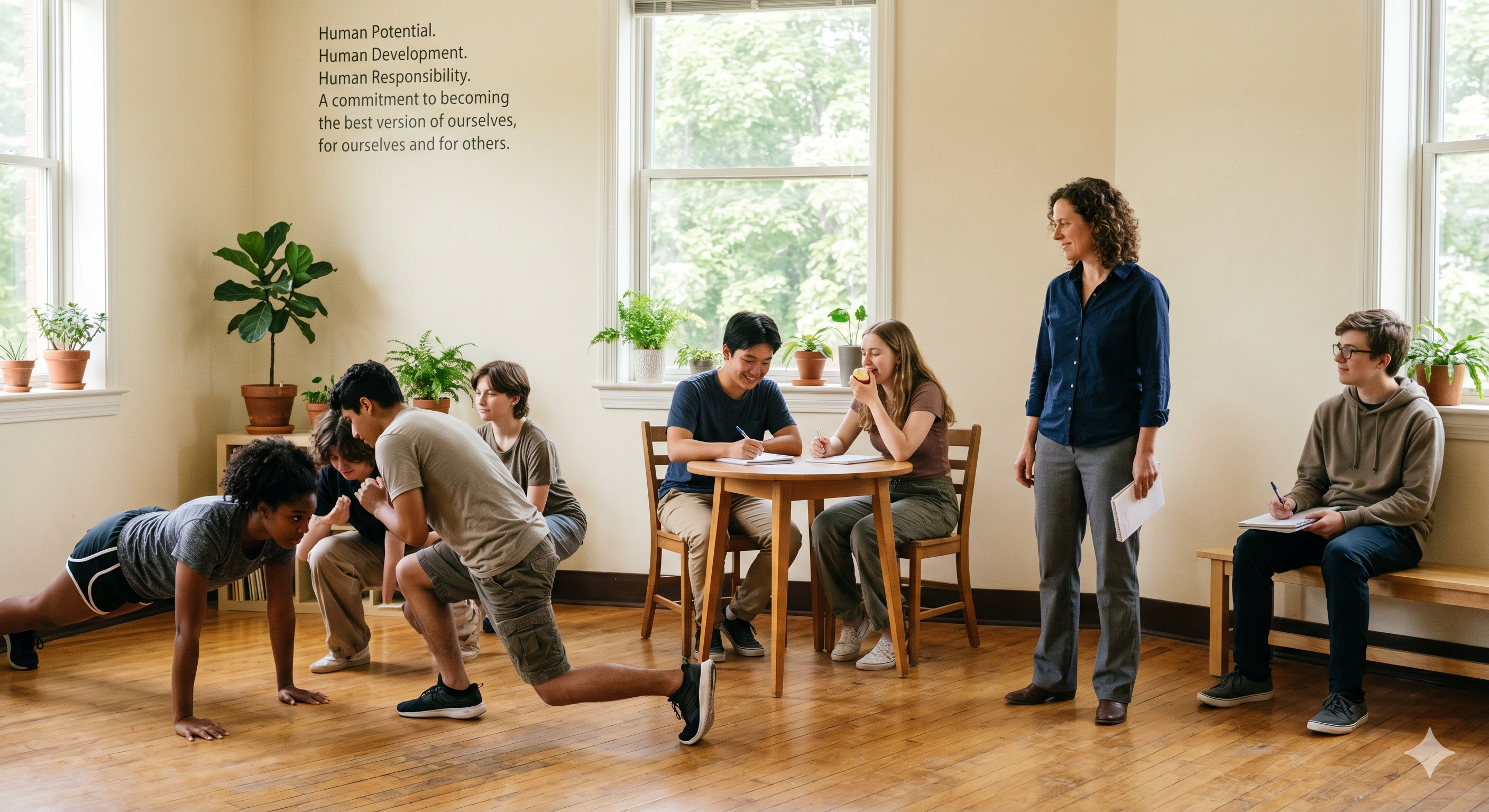
School is no longer a content delivery system. It needs to become an ecosystem for human development if we’re going to be ready for what’s coming.
I’ve presented this model to school administrators and worked through it with them. It’s not a concept. It’s a framework built from 25 years of developing humans across elite sport, university athletics, and youth programs on three continents. And it starts from a simple premise: the students walking into ninth grade today are going to live and work in a world that rewards creativity, self-awareness, and the capacity to keep learning. Sitting still for seven hours a day doesn’t build any of that. We have to do better.
Start With Who’s Actually in the Room
Every student entering ninth grade gets assessed across three domains: movement competency, self-efficacy, and energy literacy. Mind, body, and energy.
Not to rank them. To understand them. And to begin building a curriculum around developing all three over four years.
A child who doesn’t sleep well can’t consolidate learning. The neuroscience on this is unambiguous. A child whose movement competency is behind their peers quietly disengages from physical activity and carries that disconnection into everything else. A child who doesn’t understand how fueling affects focus will hit a wall mid-morning and have no idea why. These aren’t fringe cases. They’re the majority of students in every school, every day, going unaddressed.
When you assess mind, body, and energy on entry, you give teachers and administrators a picture of the whole student. Not just what they know but what they’re capable of and what’s getting in the way. The curriculum gets built around developing all three over four years.
That understanding matters more than it ever has. Learning is no longer primarily rote. Knowledge is accessible. What the world now needs from young people is creativity, sustained attention, emotional regulation, and the wisdom to apply what’s known to problems without predetermined answers. Those capacities don’t live in a textbook. They live in the student. And they depend on how well that student understands and manages their own mind, body, and energy.
Restructure the Day Around Biology, Not Bells
The research on movement and cognition is consistent and has been for decades. Short bouts of physical activity before concentrated academic work increase attention, executive function, and the neurological conditions for learning. Brain-derived neurotrophic factor, the brain’s primary growth factor for new neural connections, rises for up to 60 minutes following moderate aerobic activity. You’re not interrupting learning by adding movement. You’re creating the conditions for it.
The research also shows that shorter bouts are more effective than longer ones for acute cognitive improvement. Ten to fifteen minutes is not a compromise on the science. It is what the science recommends.
Here’s what the restructured day looks like in practice. Every class period begins with a ten to fifteen minute movement flow, level-specific, taught on entry and progressed over time. Not PE. Something each student owns and understands. Thirty minutes of concentrated learning is followed by ten minutes of movement, mindfulness, or breathing before the next block begins. For denser subjects, a ninety minute period still contains thirty minutes of structured recovery and reorientation. The academic content doesn’t get less time. It gets better conditions.
Healthy snack options are available throughout the day. Sustained energy availability supports sustained attention. A student grazing on real food throughout the morning is a student whose blood glucose, and therefore cognitive capacity, doesn’t crater before lunch. This isn’t nutrition programming. It’s performance management applied to the learning environment.
Physical Literacy Is the Foundation, Not an Elective
The movement flows students are taught on entry aren’t random. They’re built from the fundamental movement patterns that govern all human physical activity: squat, lunge, upper push and pull, trunk bend and rotate, and single leg stance for gait. The research on physical literacy is clear that these foundational patterns, developed systematically and progressed over time, are associated with lifelong participation in physical activity, better health outcomes, and sporting success.
But the most important outcome isn’t physical. Research published in Frontiers in Public Health found that resilience in children and adolescents can be predicted by movement confidence and competence. A student who learns to move well, who feels capable in their body, develops a psychological foundation that transfers into the classroom, into relationships, and into whatever comes next.
That’s the mechanism most schools miss. They see physical activity as time away from learning. The evidence says physical competence is a prerequisite for the kind of learning we now need young people to do.
Self-Determination Theory, one of the best-supported frameworks in motivational psychology, identifies three basic psychological needs that drive sustained engagement: autonomy, competence, and relatedness. Research consistently shows that environments which build genuine competence, not performance rankings, but felt capability, produce higher intrinsic motivation, greater emotional wellbeing, and more sustained participation across every domain. When a student can do something with their body in January that they couldn’t do in September, that’s not just physical progress. It’s evidence-based confidence.
Sport Belongs in This Model. But Not Only the Sports on Television.
School sport doesn’t disappear in this model. It evolves.
Schools become academies of human development where multiple levels of participation exist for every interest and capability. Competitive teams for those drawn to traditional sport. Fitness-based challenges, strength progressions, obstacle formats, team conditioning for those who want to test themselves differently. The measure isn’t a varsity letter. It’s visible, felt capability progressing over time.
Coaches in this environment are educated in long-term human development, not just sport-specific tactics, and paid accordingly. Their role isn’t to produce winning teams. It’s to develop capable, confident humans who happen to be expressing that capability through sport.
For students who go on to compete at a higher level, this foundation makes them better athletes. For those who don’t, they leave school understanding how their body works, how to fuel it, how to move it well, and why any of it matters.
That’s an outcome worth building for.
The Bigger Picture
People worry about what AI and technology will do to human capability. It’s a legitimate concern, but it points in the wrong direction. The answer to an increasingly automated world isn’t to double down on rote academic content. It’s to develop the human capacities that automation can’t replace: creativity, physical capability, emotional regulation, self-knowledge, and the wisdom to apply what you know in situations that don’t have predetermined answers.
Strong, capable, self-aware humans don’t get replaced by technology. They use it.
A young person who leaves school understanding themselves, knowing how to take care of their mind, body, and energy, and confident in their own capability is a person prepared for whatever comes next. Not just academically. As a human.
That’s the real return on the investment. And it starts with deciding that school’s job is human performance, not just content delivery.
Key Research Referenced
Movement breaks and cognitive performance
Active breaks in the classroom are associated with improvements in attention, working memory, and inhibitory control. A 2026 systematic review in Educational Psychology Review confirmed measurable improvements in mathematical performance and executive function following classroom active breaks. Shorter bouts (10 to 15 minutes) produce stronger acute cognitive effects than longer ones.
Valentini, M., Gennari, A.S. (2024). The Effects of Physical Activity on Cognitive and Learning Abilities in Childhood. The European Educational Researcher, 7(1), 1-30.
Peiris, D.L.I.H.K., Duan, Y., Vandelanotte, C., Liang, W., Yang, M., Baker, J.S. (2022). Effects of In-Classroom Physical Activity Breaks on Children’s Academic Performance, Cognition, Health Behaviours and Health Outcomes. International Journal of Environmental Research and Public Health, 19(15), 9479.
BDNF and exercise
Aerobic exercise produces a consistent increase in brain-derived neurotrophic factor (BDNF) for up to 60 minutes following activity. BDNF supports neuroplasticity and the formation of new neural connections underlying learning and memory.
Physical literacy and resilience
Resilience in children aged 9 to 12 was significantly predicted by movement confidence, competence, and overall physical literacy. Physical literacy development in schools is directly associated with better psychological and social outcomes.
Gunnell, K.E., Longmuir, P.E., Barnes, J.D., Belanger, K., Tremblay, M.S. (2019). Physical Literacy and Resilience in Children and Youth. Frontiers in Public Health, 7, 346.
Fundamental movement skills
Foundation movements including squat, lunge, upper push and pull, trunk bend and rotate, and single leg stance for gait are associated with lifelong physical activity participation, health benefits, and sporting success when developed systematically during school years.
McKean, M. (2014). Development of Physical Literacy and Movement Competency: A Literature Review. Journal of Fitness Research, 3(2).
Self-Determination Theory and competence
Environments that build genuine competence, autonomy, and relatedness produce higher intrinsic motivation, greater emotional wellbeing, and more sustained engagement across academic and athletic contexts.
Deci, E.L., Ryan, R.M. (2000). Self-Determination Theory. Psychological Inquiry.
Physical activity and academic performance
Physical activity opportunities before, during, and after school outweigh the benefits of exclusive use of school time for academic instruction. Physical activity does not inhibit academic performance. It supports it.
National Academies of Sciences, Engineering, and Medicine. (2013). Educating the Student Body: Taking Physical Activity and Physical Education to School. Washington, DC: The National Academies Press.
See how R1 Ready First tracks Mind, Body, and Energy.
R1 Ready First gives coaches, parents, and administrators a clear picture of where each student-athlete actually is, so the environment can meet them there.